
Zero-Based Budgeting vs. the 50/30/20 Rule: Which One Actually Works for Beginners?
KSKim Starks · July 29, 2026 · 4 min read
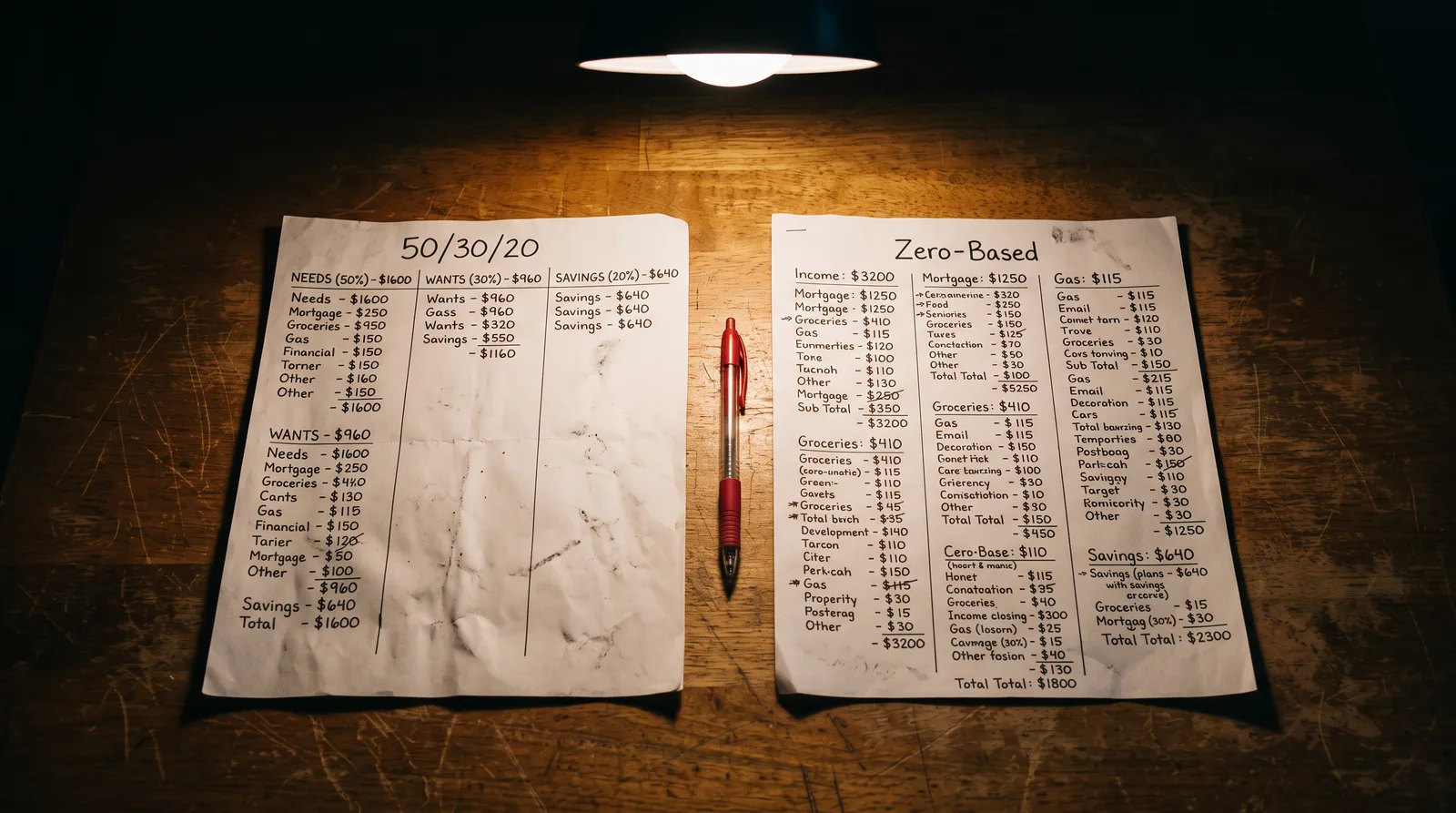
Every beginner eventually lands on the same two budgeting methods. The 50/30/20 rule is on every personal finance TikTok. Zero-based budgeting is the darling of the debt-payoff community. Both have fans, both have results — and neither one is universally better than the other.
What matters is which one fits your income, your spending patterns, and your current financial goals. Let me walk you through both so you can make a real decision, not just pick whichever one sounds more motivating at 11pm.
What Is the 50/30/20 Rule?
The 50/30/20 rule divides your after-tax income into three buckets:
- 50% goes to needs (rent, utilities, groceries, transportation, minimum debt payments)
- 30% goes to wants (dining out, subscriptions, entertainment, shopping)
- 20% goes to savings and extra debt payoff
It's a percentage-based framework, which means it scales automatically with your income. Earn $3,000/month? You're working with $1,500 for needs, $900 for wants, and $600 for savings. Earn $5,000? The math adjusts accordingly.
The honest upside: It's fast to set up, easy to remember, and it doesn't require tracking every dollar. For someone who's never budgeted before and feels overwhelmed, the 50/30/20 rule lowers the barrier to entry dramatically.
The honest downside: Those percentages were designed around a median income. If you're earning $2,800/month in a city where a one-bedroom apartment runs $1,400, you've already blown 50% on rent alone — before utilities, groceries, or a car payment. The rule doesn't flex for real-life income constraints, and it gives the "wants" category a lot of unearned generosity.
What Is Zero-Based Budgeting?
Zero-based budgeting (ZBB) works from a different premise entirely. Every dollar of your income gets assigned a job before the month begins. At the end of your budget, income minus expenses equals zero — not because you spent everything, but because every dollar is accounted for, including savings, debt payoff, and future expenses.
Here's a simplified version. Say you bring home $3,200/month:
| Category | Amount |
|---|---|
| Rent | $950 |
| Utilities | $130 |
| Groceries | $350 |
| Transportation | $280 |
| Phone | $75 |
| Subscriptions | $40 |
| Dining out | $120 |
| Clothing | $50 |
| Emergency fund | $200 |
| Credit card payoff | $500 |
| Savings | $300 |
| Sinking funds (car repair, etc.) | $150 |
| Total | $3,200 |
Every dollar has a name. Nothing is floating.
The honest upside: This method is extraordinarily powerful when you're paying off debt, building an emergency fund from zero, or trying to find hidden spending leaks. It forces you to confront your money instead of just checking a percentage box. It's also far more flexible than it looks — you can shift dollars between categories mid-month as real life happens.
The honest downside: It takes time. You need to estimate categories, track spending throughout the month, and adjust when life doesn't cooperate. For someone who's never tracked spending before, the setup can feel like a second job for the first couple of months.
Side-by-Side: The Real Differences
| 50/30/20 | Zero-Based | |
|---|---|---|
| Setup time | 15–20 minutes | 45–60 minutes |
| Ongoing tracking | Minimal | Weekly check-ins |
| Works at lower incomes | Often doesn't | Yes — fully customizable |
| Best for debt payoff | Okay | Excellent |
| Best for beginners afraid of budgeting | Yes | Takes more commitment |
| Requires knowing your spending | No | Yes |
So Which One Should You Actually Start With?
Here's my honest take: start with what you'll actually use.
If you're brand new to budgeting and the idea of tracking every dollar makes you want to close this tab — start with 50/30/20. Use it for 60–90 days to build the habit of looking at your money intentionally. Then graduate to zero-based once the habit is formed.
If you're carrying credit card debt, behind on savings, or your income is on the tighter side — go straight to zero-based. The 50/30/20 rule will feel fine on paper and leave you wondering why nothing is changing. Zero-based budgeting puts your priorities in control.
And if you're somewhere in the middle? Try this hybrid: use the 50/30/20 percentages as a diagnostic first. Run your last two months of actual spending through those buckets and see where your money is actually going. Then use zero-based budgeting to fix what's broken.
The budget that changes your life isn't the most sophisticated one. It's the one you actually open, fill in, and follow every month.
If you want to go deeper — including which budgeting apps pair best with each method, how to handle irregular income, and the exact categories I recommend for beginners — that's exactly what I teach inside Budgeting School. Come learn the whole system.

Want to go deeper than a blog post?
Budgeting School
A practical, beginner-friendly school that replaces money fear with real confidence — teaching you proven budgeting systems, cash flow clarity, and intentional financial habits that hold up in everyday life.
Start learning — $44.99/mo